
The seven Fundamental Principles of Red Cross
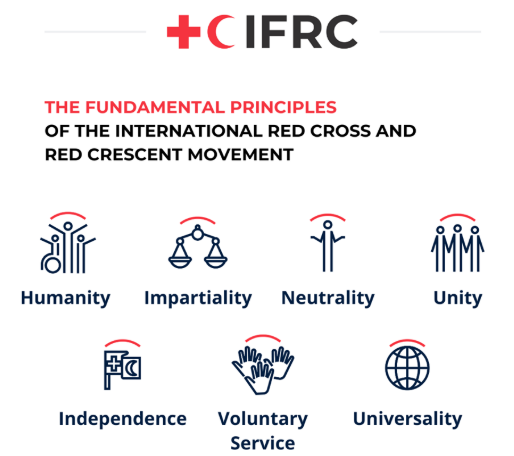
These principles unite the components of the Red Cross Movement – the ICRC, National Red Cross and Red Crescent Societies and the IFRC – and are key to their distinct identity. They serve as an ethical, operational and institutional framework that underpins the work of the International Red Cross and Red Crescent Movement. They are at the heart of the Movement’s humanitarian activities to help people in need during armed conflict, natural disasters and other emergencies. Adhering to these principles ensures the exclusively humanitarian nature of the Movement’s work and brings consistency to the broad range of activities it undertakes around the world. (Source: https://www.icrc.org/en/our-fundamental-principles)
At UWC Red Cross Nordic, a Red Cross partner College, we embody these principles in our work and in the education of our students. In practice, this means that our students receive training in the seven Fundamental Principles of the Red Cross and that these principles guide our work.
The ultimate goal of our partnership is to prepare UWC Red Cross Nordic students to be ethical leaders of tomorrow, ambassadors for the core values of both organizations, and individuals who make a positive difference in the world.
-
The Movement, born of a desire to bring assistance without discrimination to the wounded on the battlefield, endeavours – in its international and national capacities – to prevent and alleviate human suffering wherever it may be found. Our purpose is to protect life and health, and to ensure respect for the human being. We promote mutual understanding, friendship, cooperation and lasting peace among all peoples.
-
The Movement makes no discrimination as to nationality, race, religious beliefs, class or political opinions. We endeavour to relieve the suffering of individuals, being guided solely by their needs, and to give priority to the most urgent cases of distress.
-
In order to continue to enjoy the confidence of all, the Movement may not take sides in hostilities or engage at any time in controversies of a political, racial, religious or ideological nature.
-
The Movement is independent. National Societies, while auxiliaries in the humanitarian services of their governments and subject to the laws of their respective countries, must always maintain their autonomy so that they may be able at all times to act in accordance with the principles of the Movement.
-
The Movement is a voluntary relief movement not prompted in any manner by desire for gain.
-
There can be only one Red Cross or one Red Crescent Society in any one country. It must be open to all. It must carry on its humanitarian work throughout its territory.
-
The Movement, in which all National Societies have equal status and share equal responsibilities and duties in helping each other, is worldwide.